| 2025 Going Global Report Update |
Canada’s clean technology story is rooted in practical problem‑solving. At home, our energy sector has developed solutions to cut emissions, use water wisely, and run operations more efficiently—innovations now well-tested in real conditions and ready for the world. This report, an update to Alberta’s 2018 Going Global study, helps Canadian small and medium‑sized enterprises (SMEs), exporters, and policymakers focus their efforts where demand for these solutions is strong and growing.
What this report covers
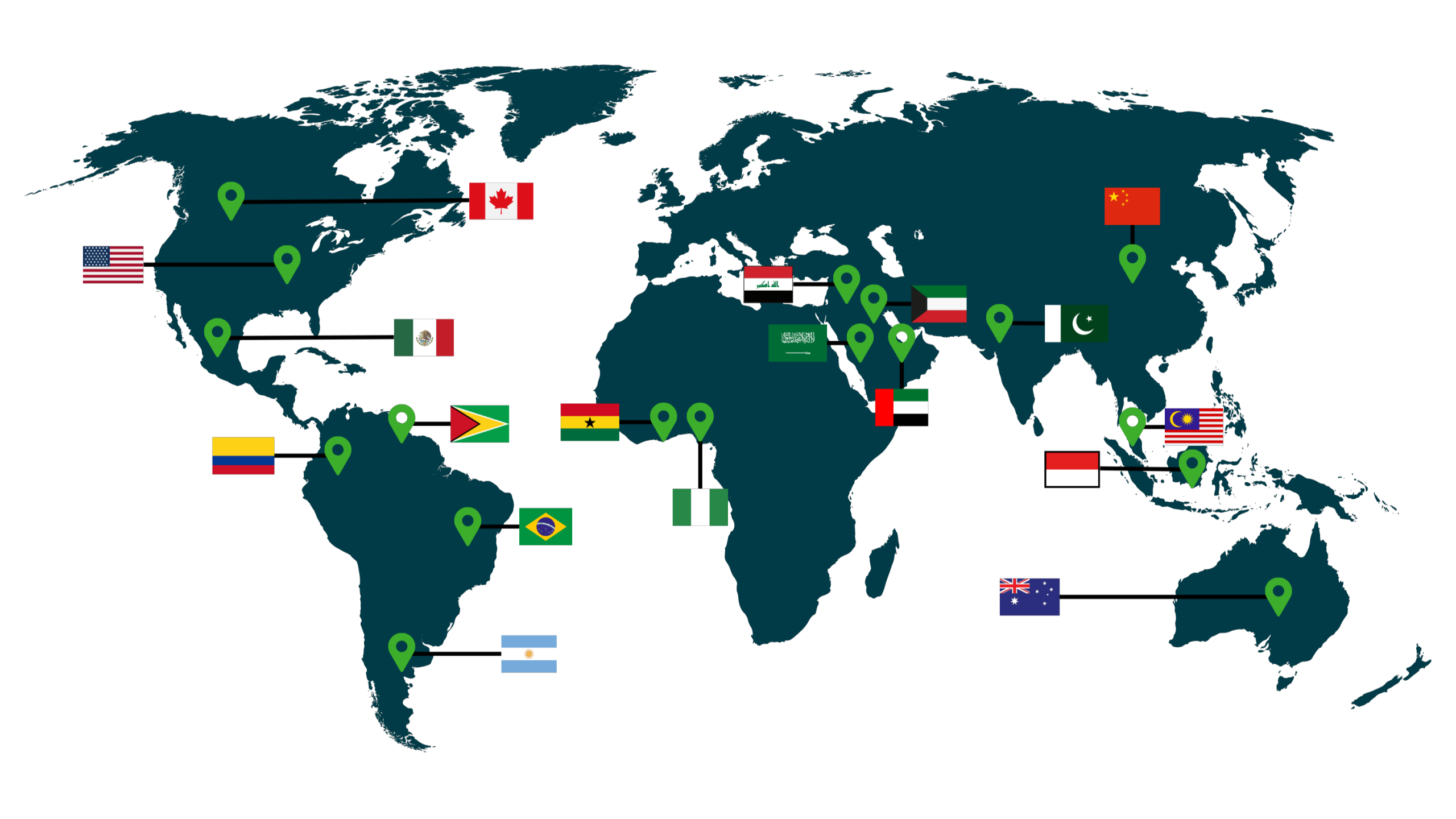
We analyze 17 priority markets selected for their scale, near‑term demand, and openness to Canadian technology and energy exports: Australia, Argentina, Brazil, China, Colombia, Ghana, Guyana, Indonesia, Iraq, Kuwait, Malaysia, Mexico, Nigeria, Pakistan, Saudi Arabia, the United Arab Emirates, and the United States. For each, we summarize the energy mix, trade flows, transition plans, emissions‑reduction and net‑zero targets, and near‑term opportunities for Canadian companies—all viewed through an energy‑transition and environmental‑management lens. The report draws on insights from Canadian Trade Commissioners and an advisory committee of Canadian industry and government partners.
Why now?
Countries are moving to cut emissions and improve energy security. Canada’s own commitments—including ambitious reductions in oil and gas methane emissions by 2030, a nationally determined contribution (NDC) of a 40% economy‑wide greenhouse gas (GHG) reduction (from 2005 levels) by 2030 and reaching net‑zero by 2050—have accelerated innovation at home. Those technologies—many de‑risked in tough Canadian conditions—are in demand abroad.
What we have found
What this means for Canadian SMEs
The Bottom Line: Global demand for Canadian cleaner technology is rising—especially solutions that reduce emissions in oil and gas and strengthen energy systems. With targeted market entry, credible partners, and bankable value propositions, Canadian firms can grow exports, create jobs at home, and help partners abroad meet their climate and energy goals.